
Stargate and Sovereignty: OpenAI Launches “OpenAI for India” as Global Ambitions Meet Local Anxiety
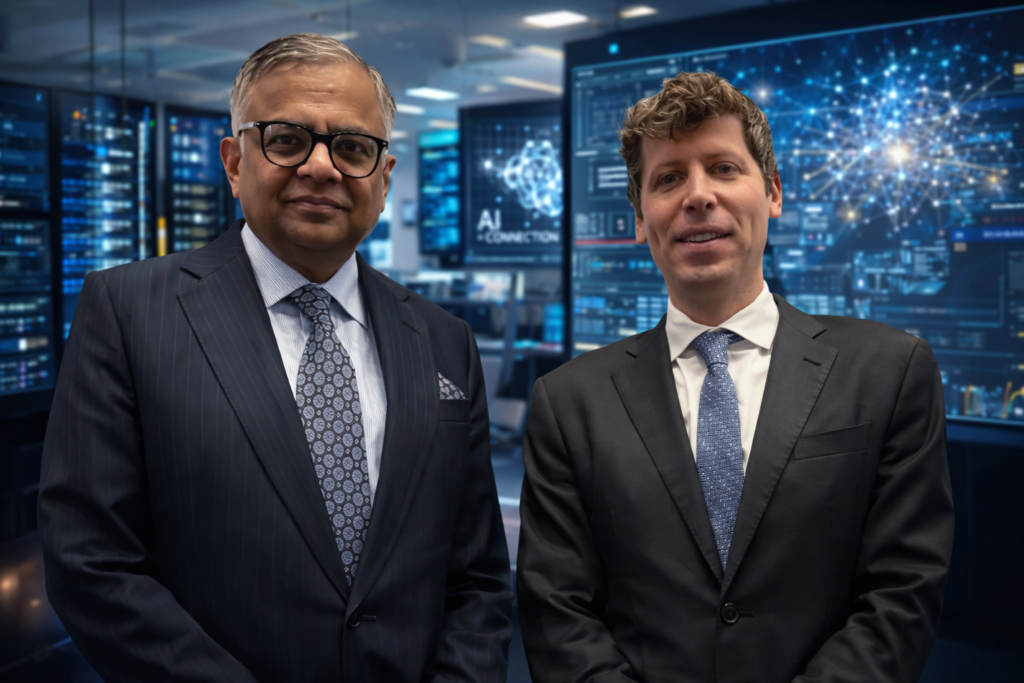
NEW DELHI. At the India AI Impact Summit 2026 OpenAI CEO Sam Altman launched “OpenAI for India ” a plan to work with India. This initiative aims to make India a key part of the world’s AI infrastructure projects while addressing India’s need for control over its own data. However this announcement has started a debate among policymakers and tech experts about the balance between using new technology and not becoming too dependent on it. The main part of the launch is a partnership with the Tata Group. This partnership will help build infrastructure that can handle AI make more businesses use AI and give education licenses. This is a deal for India.
The Tata Alliance and the “HyperVault” Foundation
A key part of the initiative is creating local AI infrastructure that India can control. OpenAI has become the major customer of Tata Consultancy Services (TCS) HyperVault data center business. This means OpenAI will use a 100-megawatt capacity for its models and this could grow to 1 gigawatt over the three years. By moving its computing resources to India OpenAI wants to meet India’s data rules. “India is not a market; it is a partner in building the future ” Altman said during his speech. The local data centers will handle government and business data keeping sensitive Indian data in India while using the power of GPT-5 and other models. Also the Tata Group will use ChatGPT Enterprise for its employees starting with hundreds of thousands of TCS employees. This is one of the AI deployments in a company globally aiming to standardize AI-driven software development using OpenAI’s Codex tools.
India as a Node in the $500 Billion “Stargate”
Altman confirmed that India will be a critical part of the Stargate Project. This project is a $500 billion venture between Microsoft and OpenAI aimed at leading in AI by 2029. Making India part of Stargate suggests a change in the global AI landscape. However this has raised questions about India’s independence in technology. Critics argue that while Stargate gives India access to computing it may tie India’s technological future to U.S.-led standards and security protocols.
The Education “Edu-Push” and the Cognitive Risk
OpenAI also announced giving over 100,000 ChatGPT Edu licenses to top institutions. While this was welcomed as a step towards closing the divide it has also raised concerns. Experts questioned whether this is about sharing licenses or a deeper commitment to research. There are concerns that a sudden influx of AI tools in classrooms could create a generation that’s good at finding answers but not at understanding.
The “Fair Use” Friction and Media Rights
There was a moment during a press interaction when Altman was asked about using Indian news data for training OpenAI’s models. Altman defended the use of content for training purposes citing the “Fair Use” principle. However this stance has met with resistance from the Indian Digital Publishers Association. They argue that “foreign fair use” should not apply to intellectual property especially when the resulting AI models could replace journalists and creators who provided the original data.
Looking Ahead: Offices in Mumbai and Bengaluru
To support this expansion OpenAI will open offices in Mumbai and Bengaluru by the end of 2026. These hubs will focus on engineering talent and fine-tuning models for many languages, specifically aimed at integrating the Bhashini framework to better serve India’s 22 official languages.As the India AI Impact Summit concluded, the “OpenAI for India” initiative shows India’s status as an user of generative AI. Whether this partnership leads to a Sovereign AI”, for India or serves as an extension of a global AI monopoly remains to be seen.
About The Author


